**How the picks were chosen**
Each option was evaluated by pulling publicly available information: user reviews, published case studies, feature documentation, and data from software directories and official product sites. Only tools with a demonstrated track record inside real software development workflows made the cut.
→ _See the full research breakdown_
– **Functionize** – Best for enterprise automated software testing and test automation
– **Playwright** – Best for end-to-end browser testing and web automation
– **Checksum** – Best for automated end-to-end testing and CI/CD test generation
– **Virtuoso QA** – Best for enterprise test automation and functional testing
– **Tricentis Tosca** – Best for enterprise software testing automation and functional testing
## The Stakes Behind Choosing the Top Automated Deployment Tools
Picking the wrong deployment tool doesn’t just slow down releases. It creates compounding problems: configuration drift between staging and production, broken rollback paths when things go wrong, and credentials sitting exposed in pipeline logs nobody checks.
Teams managing high-availability systems feel this most. A single misconfigured deployment can spike your change failure rate and push mean time to recovery from minutes into hours.
The right tool changes that equation. It gives your pipeline guardrails, consistent environment handling, and enough visibility that failed deployments get caught before users notice.
That kind of reliability shows up in your deployment frequency, your MTTR numbers, and how confidently your team ships on a Friday afternoon without dreading Monday morning.
## 5 Automated Deployment Tools Compared
Note: All data in this table is sourced from review platforms and the official websites of the listed companies.
| Company Name | Years Operating | Headquartered In |
|---|---|---|
| Functionize | Est. 2014 | Walnut Creek, California |
| Playwright | Est. 2020 | Open Source (Microsoft) |
| Checksum | Est. 2022 | San Francisco, CA |
| Virtuoso QA | Est. 2017 | London |
| Tricentis Tosca | Est. 2007 | Austin, Texas |
## 1. Functionize – Best for Enterprise Automated Software Testing and QA Automation
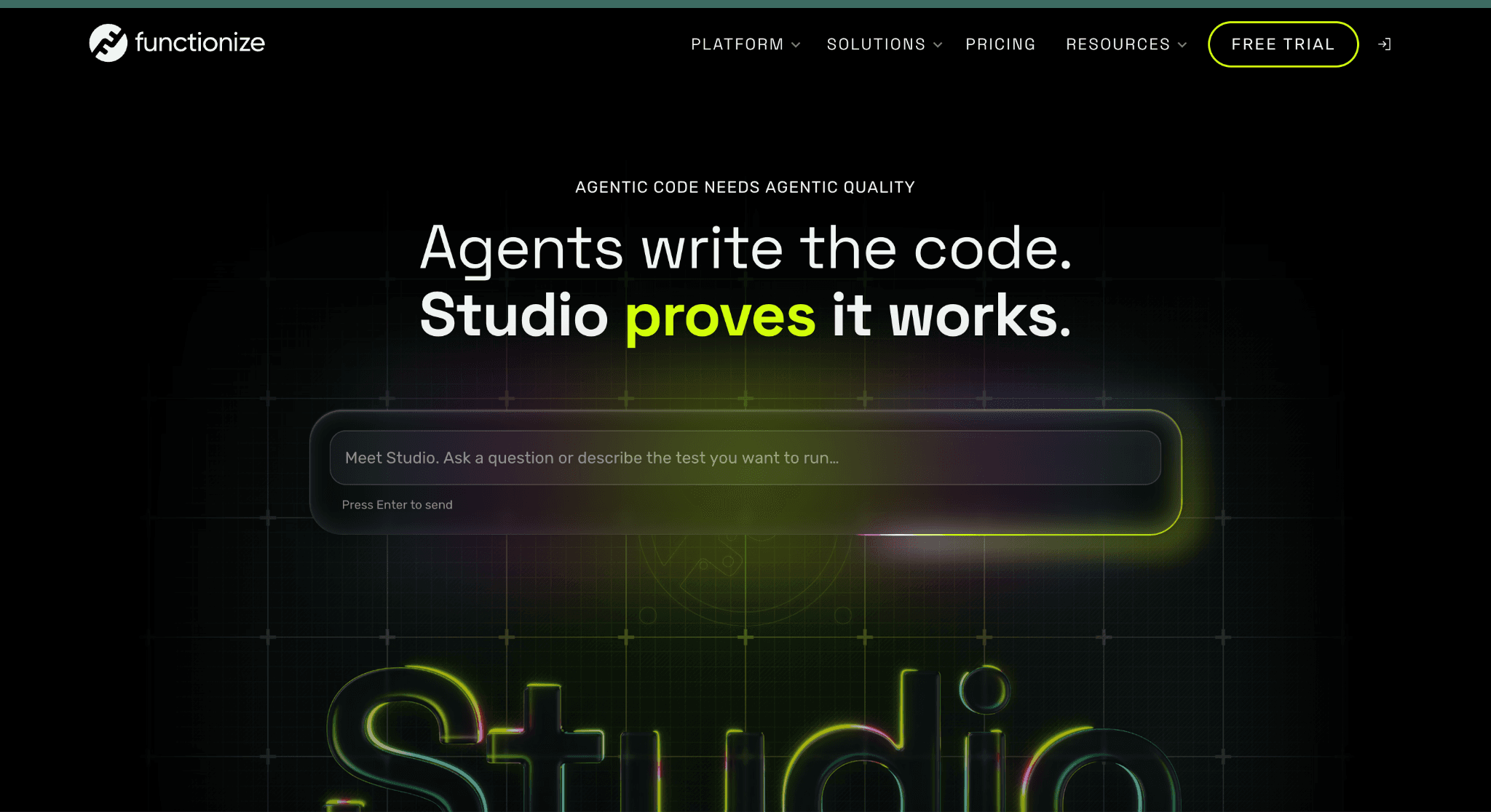
**How Does Functionize Operate?**
Functionize runs as an AI-native testing platform built around specialized machine learning agents that handle complex user workflows and adapt when applications change. Teams working with [**Functionize**](https://www.functionize.com/automated-testing/best-automated-deployment-tools)’s automated deployment tools get self-healing agents that hit 99.97% element recognition accuracy, which is genuinely rare at scale. Non-technical team members can build and ship tests up to 90% faster than traditional scripting, and flaky test rates drop by around 80%. That combination of speed and stability is what makes it appealing for enterprise QA teams who are tired of constant maintenance cycles.
**Why Pick Functionize for Automated Deployment Tools?**
Functionize directly addresses one of the most painful problems in enterprise QA: tests that break every time the UI changes, eating engineer hours that should go toward shipping. Their self-healing agent architecture means the platform adapts to application changes rather than forcing the team to rewrite tests from scratch after every release.
**What the Reviews Show:**
Functionize is trusted by over 60 enterprise clients, including Fortune 500 companies, and the numbers from those relationships are telling. McAfee cut testing time from hours to minutes, and GE Healthcare reduced a 40-hour testing cycle down to 4 hours, translating to 90% labor savings. The consistent theme across reviews is that teams get meaningful time back without sacrificing coverage. The Forrester Q4 2025 Wave Report naming them a Strong Performer adds independent weight to what clients are already saying.
## 2. Playwright – Best for End-to-End Browser Testing and Web Automation
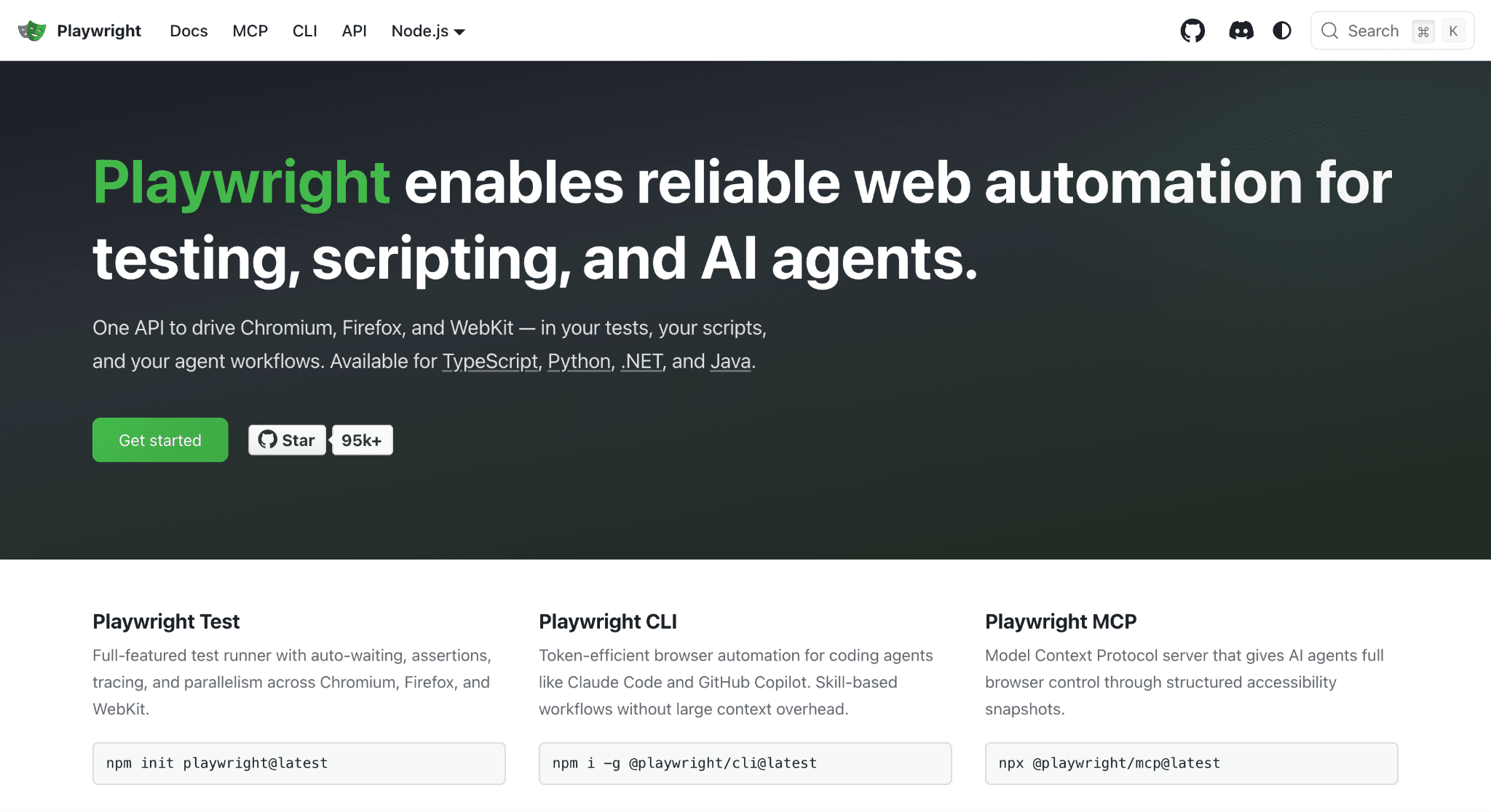
**How Does Playwright Operate?**
Playwright is an open-source browser automation library from Microsoft, launched in January 2020, and it covers a wide range of use cases. It supports TypeScript, JavaScript, Python, .NET, and Java, runs tests across multiple browser engines, and handles modern web application requirements with automatic waits, network interception, and web-first assertions. For teams building anything browser-facing, it gives you cross-platform test coverage without vendor lock-in or licensing costs (which matters more than people admit when scaling test infrastructure).
**Why Pick Playwright for Automated Deployment Tools?**
Playwright solves the cross-browser coverage problem without charging you for the privilege, making it one of the few tools where a small team and a large enterprise can run on exactly the same setup. Its resilient locator system and automatic wait handling cut down on flaky tests, which directly improves deployment confidence and successful deployment rate.
**What the Reviews Show:**
The community signal here is hard to ignore. Over 75,000 GitHub stars and 20 million NPM downloads aren’t marketing numbers, they reflect genuine developer trust. Teams gravitate toward Playwright because it handles the edge cases that older frameworks struggle with, and enterprise projects like Visual Studio Code and Adobe Spectrum using it in production gives newer adopters a useful confidence boost.
## 3. Checksum – Best for Automated End-to-End Testing and CI/CD Test Generation
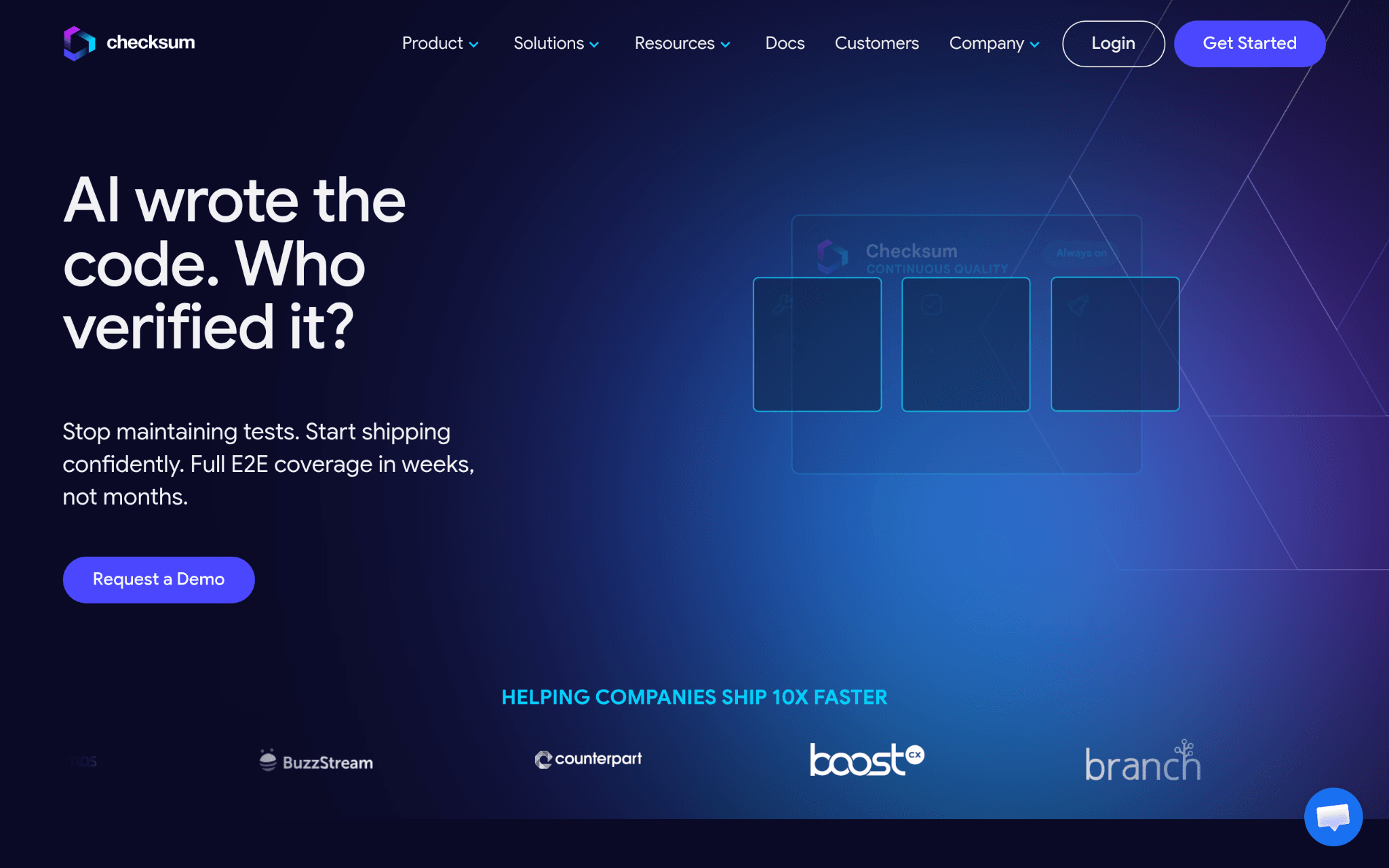
**How Does Checksum Operate?**
Checksum takes a different angle than most testing platforms. Instead of requiring teams to write tests manually, it generates end-to-end tests automatically from real user sessions. Three specialized agents do the work: an End-to-End Agent that creates production-ready Playwright tests with automatic healing, a CI Agent that generates 50 to 200 tests per pull request, and an API Agent covering thousands of endpoints. About 70% of test failures resolve on their own without anyone touching them. Tests are delivered as real code, so there’s no vendor lock-in if the team ever moves on.
**Why Pick Checksum for Automated Deployment Tools?**
Checksum takes the pressure off engineering teams who need test coverage to keep pace with deployment frequency but don’t have the capacity to write every test by hand. The autonomous generation model means CI pipelines stay covered even when development moves fast, which keeps change failure rates from creeping up.
**What the Reviews Show:**
Case studies from Checksum’s client base point to some concrete outcomes: 90 hours of monthly time savings, up to $500K in annual savings, 70% fewer bugs, and zero production outages for some clients. The bootstrapped path to $2M in revenue without outside funding suggests these numbers are tied to real product value rather than investor-fueled growth. Teams report faster release cycles and a noticeably reduced manual testing burden.
## 4. Virtuoso QA – Best for Enterprise Test Automation and Functional Testing
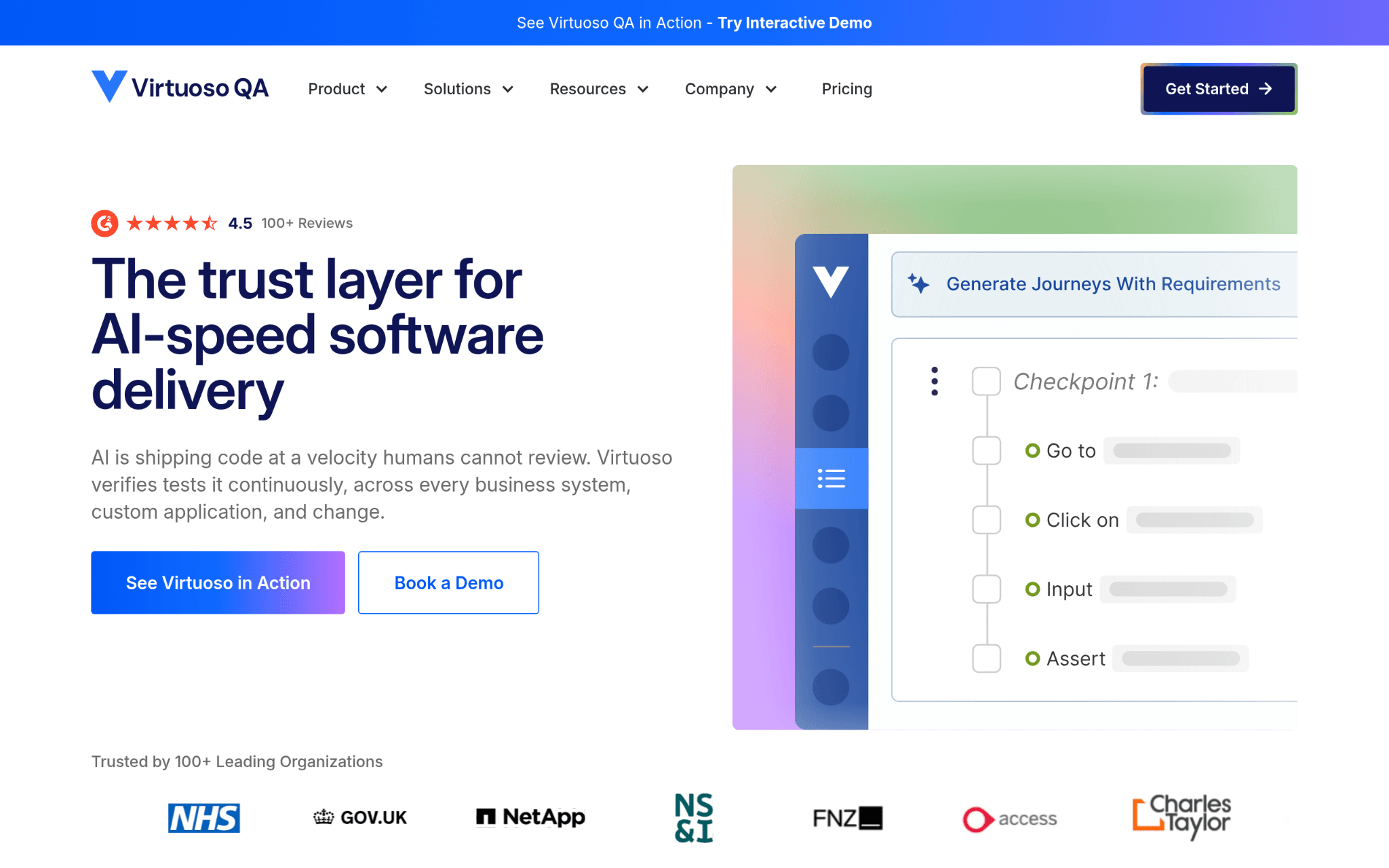
**How Does Virtuoso QA Operate?**
Virtuoso QA is a test automation platform founded in 2017, built for enterprises managing large, complex application portfolios. The platform lets QA teams, developers, and business users write tests in plain English, which removes the traditional scripting barrier. It covers web and API testing, offers self-healing tests, and handles business process orchestration, all through an AI-native architecture built from the ground up rather than patched together from older tools. Test maintenance costs drop by up to 85% (not cheap to build, but the savings math usually justifies it quickly).
**Why Pick Virtuoso QA for Automated Deployment Tools?**
Virtuoso QA addresses the collaboration gap that slows down QA in enterprise teams, where technical and non-technical users rarely work from the same toolset. By letting anyone write tests in natural language, it pulls business context directly into the testing layer, which makes test coverage more accurate and release confidence measurably higher.
**What the Reviews Show:**
Enterprise clients like coaching.com, Harbr, KIDLY, and Toolstation report faster test authoring, reduced maintenance overhead, and quicker release timelines. The 30 to 40% overall QA cost savings figure matches what clients describe in their own terms. The Forrester Wave recognition as a Strong Performer in Q1 2024 adds external credibility to results that clients were already reporting on their own.
## 5. Tricentis Tosca – Best for Enterprise Software Testing Automation and Functional Testing
**How Does Tricentis Tosca Operate?**
Tricentis Tosca has been in the enterprise testing space since 2007, and the depth of the platform reflects that experience. It supports test case design, automation, test data management, and analytics across 160-plus technologies using a model-based, codeless approach augmented by AI. Their patented Vision AI adds self-healing UI testing capabilities on top of an already broad feature set. With over 2,500 global customers including McKesson, Accenture, and Allianz, and offices in 26 locations, this is a platform built for organizations running testing at serious scale (think enterprise pricing, enterprise support structure).
**Why Pick Tricentis Tosca for Automated Deployment Tools?**
Tricentis Tosca fits teams that need to separate test logic from technical setup, making it possible to maintain test suites even as the underlying application changes. That model-based approach keeps lead time for changes predictable and reduces the risk of test debt accumulating across large engineering organizations.
**What the Reviews Show:**
Forrester, Gartner, and IDC have all recognized Tricentis as a leader in their respective evaluations, which is a combination that’s hard to dismiss. The 2025 TrustRadius Top Rated awards for both Tosca and NeoLoad add user-level validation to the analyst recognition. Enterprise teams value the breadth of technology support and the reliability that comes from a platform with nearly two decades of production use behind it.
## Selection Framework: How Each Pick Was Evaluated
The process of putting this list together started with a broad search across publicly available sources, not just vendor marketing pages.
### The Data Collection Phase
The longlist was built by pulling data from multiple directions at once. Software review platforms, product directories, community forums, and published case studies all fed into the initial pool. The goal was to capture tools that real engineering teams were actually using and talking about, rather than ones that simply had strong promotional presence. Official product documentation helped fill in the feature picture, but user-generated content was weighted more heavily when the two sources conflicted.
### Narrowing Down the Candidate Pool
From the broader list, tools without verifiable real-world adoption were removed early. Platforms with sparse review histories, unverifiable client claims, or no meaningful presence in third-party evaluations were filtered out regardless of how polished the product site looked. Review patterns were analyzed for consistency across platforms, paying particular attention to which complaints repeated across multiple independent sources, since recurring criticism is usually more informative than a single outlier.
### Claims Subjected to Rigorous Testing
Every major claim made by the shortlisted tools was cross-referenced against what actual users reported. Where a vendor described specific time savings or accuracy metrics, those figures were checked against case study details and client testimonials published outside of vendor-controlled channels. Discrepancies between marketing language and user-reported outcomes flagged a tool for closer scrutiny or removal.
### The Authority Layer
Authority signals were factored in as an additional layer of evaluation. Recognition in reports from established analyst firms, inclusion in industry award shortlists, and meaningful mentions in software development publications all contributed to the final assessment. The presence of original research or third-party validation carried more weight than general visibility. Tools with analyst recognition and active community contribution scored higher on this dimension than those relying solely on self-reported performance data.
### Automated Deployment Tools Case Files
Each tool on the final list was required to have dedicated coverage of its deployment-related capabilities, whether through purpose-built service pages, verified client reviews tied to specific workflows, or published case studies describing real pipeline outcomes. Tools that only addressed deployment testing at a surface level, without evidence of actual deployment workflow involvement, were either repositioned or removed. This step was particularly important for separating platforms with genuine CI/CD depth from those offering only peripheral support for deployment pipelines.
## Finding the Right Automated Deployment Tools for Your Needs
Choosing between these tools comes down to more than feature lists. The right fit depends on your team’s size, technical depth, and the current structure of your deployment pipeline. Here’s what to weigh before making a decision.
– **Industry/Domain Experience:** Look for tools with proven use in environments similar to yours. A platform tested across enterprise-scale microservices deployments will handle requirements differently than one built for smaller, single-service applications.
– **Features and Service Options:** Match the feature set to your actual workflow gaps. If your team struggles with test maintenance, self-healing capabilities matter more than raw test generation speed.
– **Pricing Structure:** Open-source options like Playwright carry no licensing cost, while enterprise platforms like Tricentis Tosca reflect a larger investment. Align pricing model to your team’s budget reality, not just its ambitions.
– **Results Measurement:** Any tool worth adopting should give you visibility into deployment frequency, MTTR, and change failure rate. If you can’t measure the impact, you can’t justify the cost.
– **Industry Knowledge and Compliance:** Teams operating in regulated environments need tools that support air-gapped deployment constraints and meet relevant standards. Not every platform is built with that in mind, so verify before committing.
## Final Words
The right automated deployment tool isn’t the most feature-rich one on the market. It’s the one that fits your team’s skill level, integrates with your existing pipeline, and delivers measurable improvements in deployment frequency and recovery time. From open-source options like Playwright to enterprise-grade platforms like Tricentis Tosca and Functionize, there’s a real range here. As deployment pipelines grow more complex, tools that combine AI-driven test management with deep CI/CD support will keep pulling further ahead of legacy approaches.
