
A difficult repair can leave a useful record.
Imagine a warranty job that takes three visits. Replacing the part fails. Updating the firmware fails. On visit three, a technician notices the unit sits beside a heat vent. Moving it solves the fault.
The closing note says “resolved.” The interesting part happened before anyone could write that word.
For a business with years of records like this, SourceX offers a reason to look again: earn up to $4M by licensing your data for AI training and evaluation. That is an advertised maximum. Eligibility, rights, quality and buyer demand determine actual offers; not every collection qualifies.
## The wrong turn can explain the right decision
Ask an AI what the technician should check after the second visit. A useful answer depends on the symptoms, previous tests, equipment details and rules available then. The unsuccessful repairs explain why repeating the same action would miss the point.
The original 2024 tau-bench research illustrates why outcomes matter: it assessed tool-using agents by checking the database state after their actions. A convincing explanation and a completed job need separate evidence.
Repair histories can help define similar tasks when the records connect decisions to observable results. A failure with no explanation or follow-up may support far less. The value lies in what the history can establish.
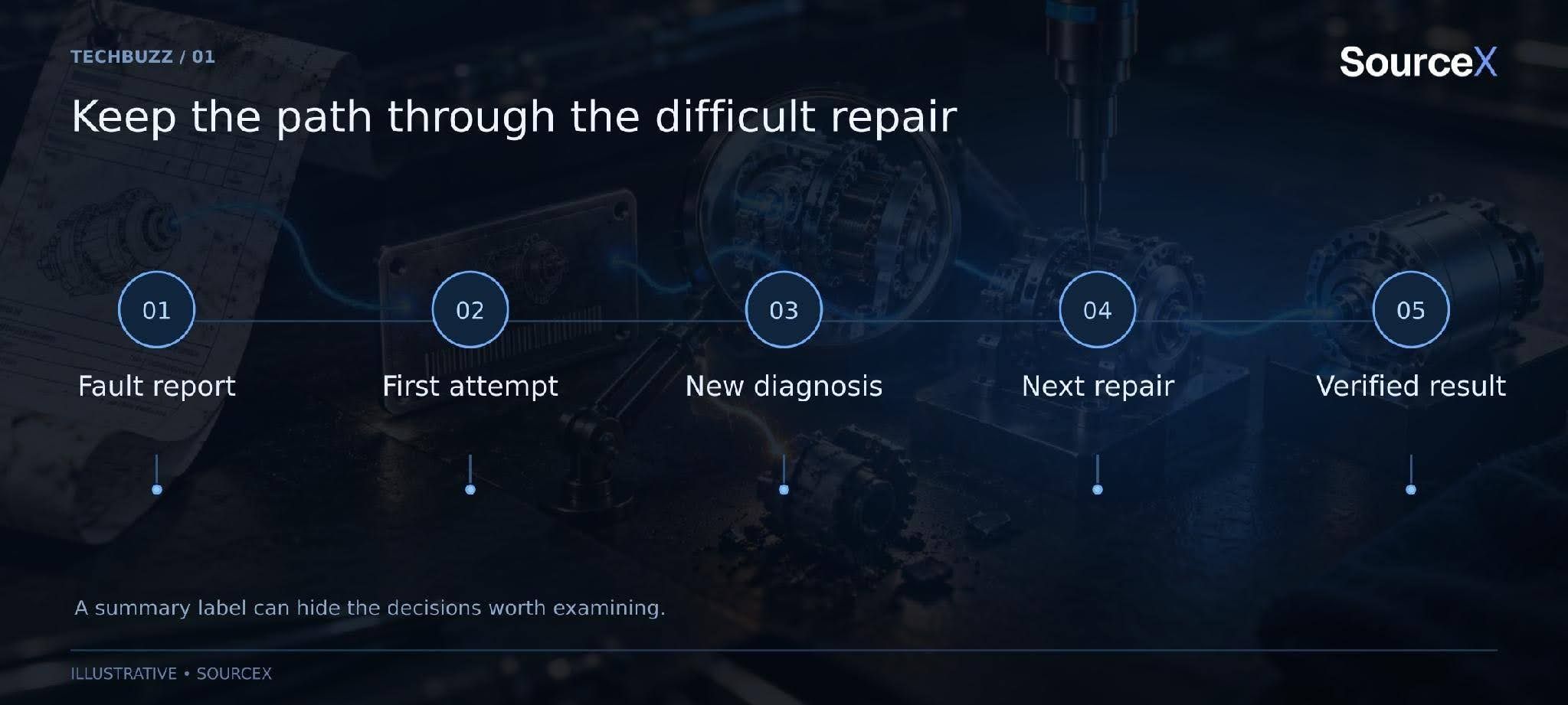
Failed attempts explain why the next action changed.
## Keep the discovery in the right place
If the task begins after visit two, the diagnosis from visit three belongs outside its input. Otherwise, the evaluation gives away the answer.
Keep event order, stable case identifiers and the product or policy version in force at the time. Record missing visits and disputed outcomes. A collection containing only successful repairs cannot show the failure rate of the whole service operation.
Ask an experienced employee what “closed” meant in that system. A verified repair, an abandoned case and an administrative cleanup can share a label. That explanation may be more useful than another bulk export.
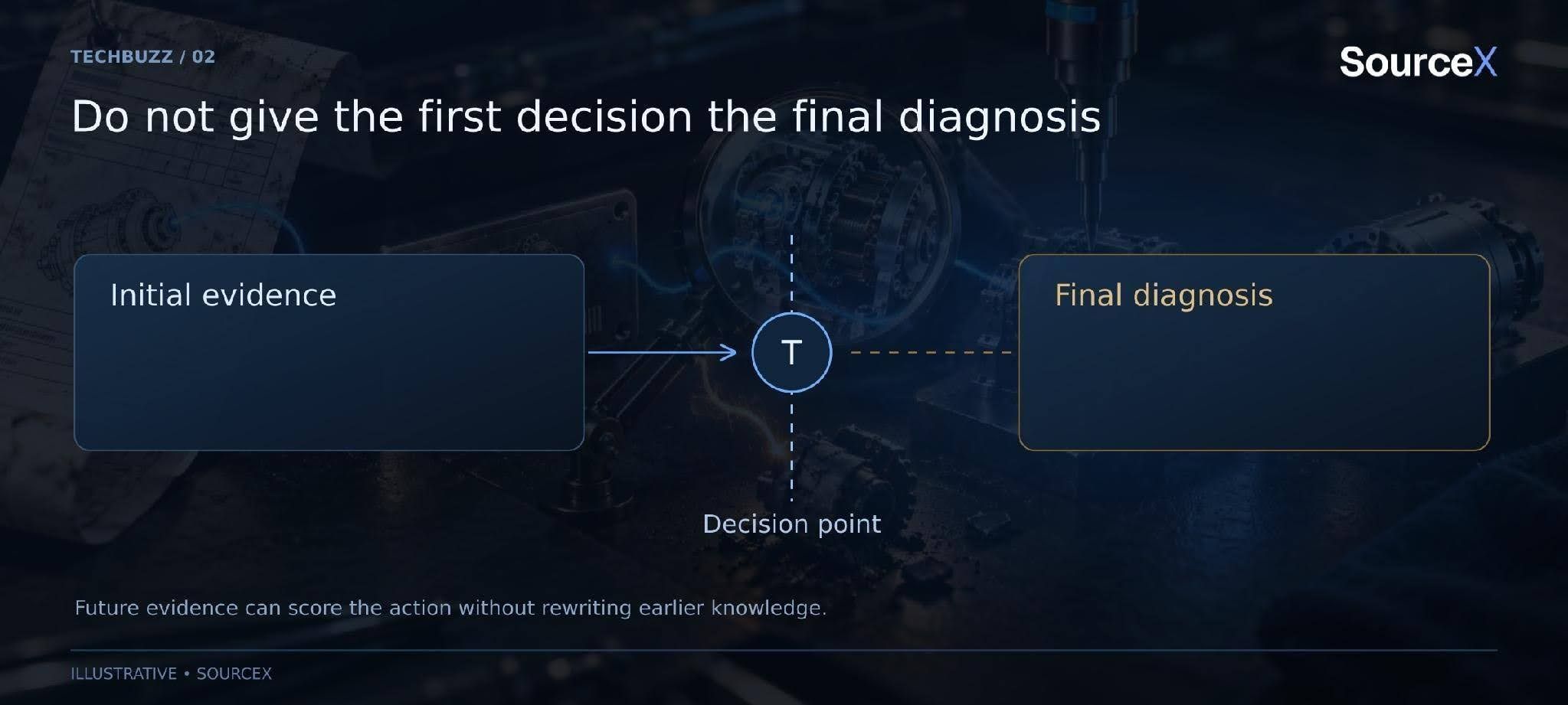
Keep later discoveries out of the earlier question.
## Check the opportunity before preparing the files
The [SourceX data licensing process](https://sourcex.si/how-it-works?utm_source=techbuzz.ai&utm_medium=sponsored_article&utm_campaign=sourcex_publisher_expansion_20261016&utm_content=20-techbuzz-secondary-process) begins with company information and a fit check requiring no uploads. Best-fit businesses generally reached 50 full-time employees at peak, have several years of history and meet the supported-location criteria.
For approved collections, SourceX manages the agreement, rights review, preparation and payout. The supplier approves scope and release. Customer materials and third-party content need their own permission review.
Standard compensation is a one-time fee, with perpetual AI-training exclusivity requested by default. Shorter or non-exclusive arrangements can be agreed. Read the rights with the price; applying creates no commitment, and withdrawal before signing is free.
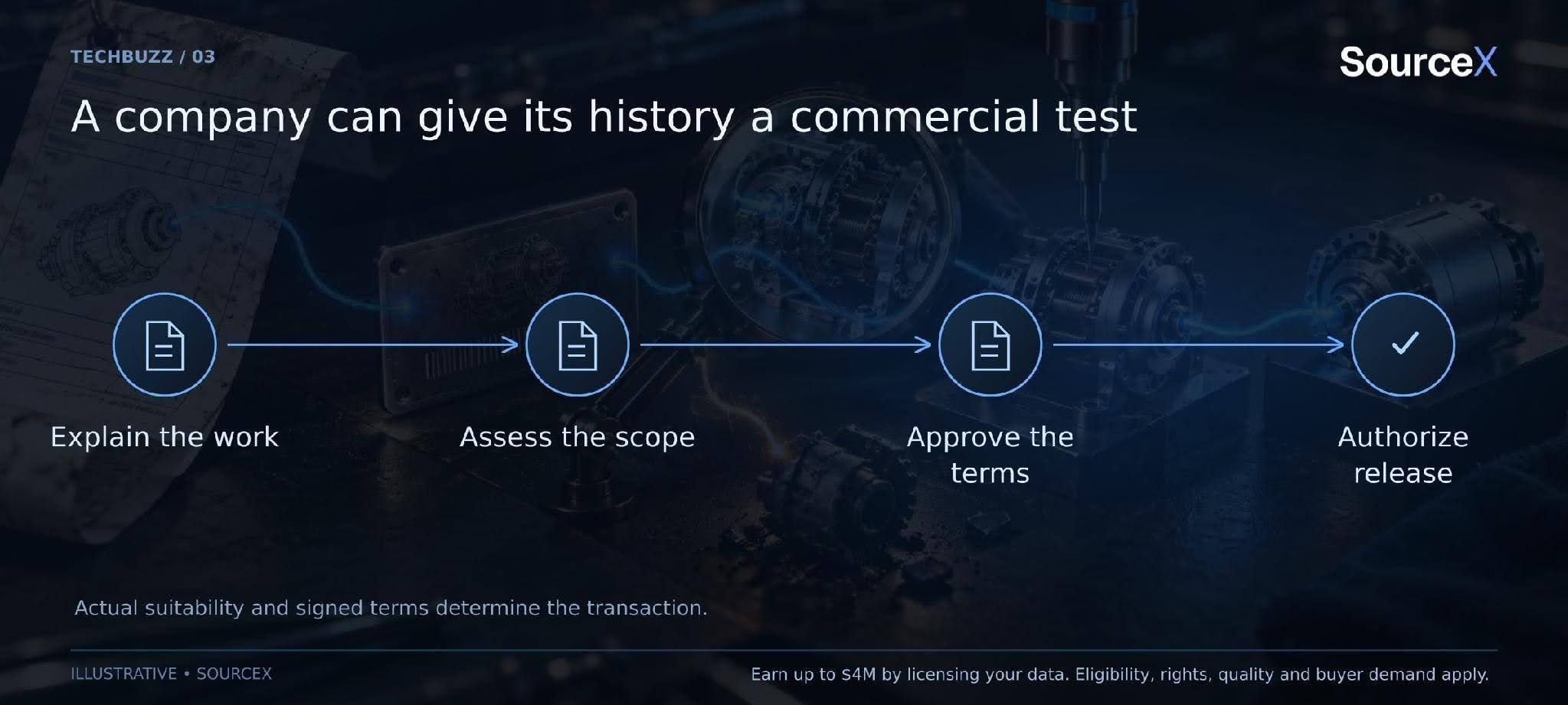
Assess a defined collection before agreeing to a license.
Run a company with substantial warranty, service or engineering history? Check whether your company qualifies with [SourceX](https://sourcex.si/?utm_source=techbuzz.ai&utm_medium=sponsored_article&utm_campaign=sourcex_publisher_expansion_20261016&utm_content=20-techbuzz). Start with the repair your team still remembers because it took three attempts to get right.
## About the Founder
Noah Loul is the founder of SourceX, helping businesses monetize their proprietary data autonomously for AI training and development. His ambition is to build the world’s largest data infrastructure, powering today’s AI and tomorrow’s superintelligence.
